An Enduring Classic
In a world of hundreds of tarot decks featuring every artistic style imaginable, the Rider-Waite-Smith (RWS) deck continues to outsell them all. First published in 1909, this deck has shaped the visual language of modern tarot more than any other, and it remains the standard reference point for virtually all tarot education.
But what makes this century-old deck so enduringly popular? And is it still the right choice for today’s readers?
The Revolutionary Design
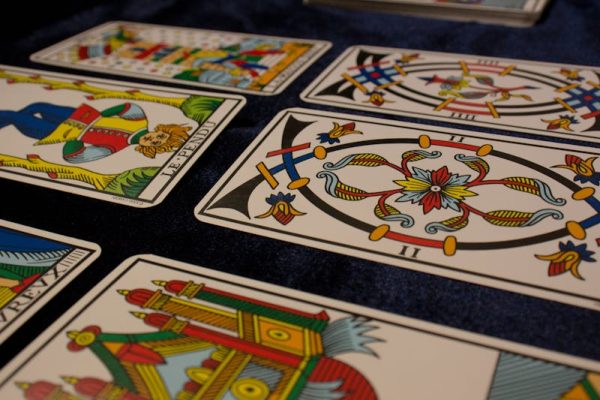
Before the RWS deck, most tarot decks used simple pip designs for the Minor Arcana — the Three of Cups, for example, would show three cups arranged on the card with no scenic illustration. Pamela Colman Smith’s revolutionary contribution was to illustrate every single card with a detailed, narrative scene.
This seemingly simple change transformed tarot from an esoteric system requiring extensive memorisation into an intuitive art form accessible to anyone. You don’t need to know that the Three of Cups traditionally represents celebration and friendship when the card shows three women dancing joyfully together — the meaning is right there in the image.
The Symbolic Depth
Beneath the apparently simple illustrations lies extraordinary symbolic depth. Arthur Edward Waite embedded layers of esoteric symbolism drawn from the Hermetic Order of the Golden Dawn’s teachings, connecting each card to astrological, kabbalistic, and alchemical correspondences.
This means the RWS deck rewards both casual and deep study. A beginner can read the cards intuitively from the illustrations, while an advanced student can spend years uncovering increasingly subtle symbolic layers. Few decks offer this dual accessibility.
Why It’s Still Recommended for Beginners
The RWS deck remains the most-recommended beginner deck for practical reasons. The vast majority of tarot books, courses, and online resources use RWS imagery as their reference point. Learning with an RWS or RWS-based deck means every learning resource is directly applicable to your cards.
Additionally, the clear, narrative illustrations make intuitive reading natural even before you’ve studied card meanings. The imagery tells stories that connect to universal human experiences, making them relatable across cultures and generations.
Modern Versions and Alternatives
If the original RWS art style feels dated, numerous modern reinterpretations maintain the same symbolic structure with updated aesthetics. The Universal Waite Deck features recoloured versions of Smith’s original illustrations, while the Radiant Rider-Waite offers vibrant, enhanced colours.
For a completely modern take on the RWS system, the Light Seer’s Tarot reimagines each card with contemporary, inclusive artwork that resonates with today’s readers while maintaining faithful connections to the original symbolism.
The Verdict
The RWS deck has earned its position at the top through a combination of accessible illustration, deep symbolic richness, and unmatched resource compatibility. While it may not be the most visually striking deck by modern standards, its fundamental design remains arguably the most effective tarot learning tool ever created.
Explore the RWS deck and its many modern descendants in our tarot deck collection, and pair it with classic reference guides from our Books & Guides section.
Continue Reading
The Best Oracle Decks for Beginners: Our Top Picks for 2026
Oracle cards are wonderfully accessible for beginners. Discover our top recommended oracle decks that are…
 Product Reviews
Rider Waite Tarot Deck Review: The Best Beginner Deck in 2026?
In-depth review of the Rider Waite Tarot Deck — the world's best-selling tarot deck. We…